


Public Education: Our Future, Our Past?
 By Frank F Islam & Ed Crego, September 3rd, 2026 (Image credits: Tom de Boor/JNCGPT56)
Through the centuries, public education evolved from a concept of some of the founding fathers — most notably, Thomas Jefferson, John Adams and George Washington — to a foundational reality for our nation. Today the future of that reality is becoming more and more uncertain.
In 2020, during the pandemic, the Center on Education Policy at George Washington University published a report titled, For the Common Good: Recommitting to Public Education in a Time of Crisis. Since then, that crisis has not abated.
In 2026, it continues for many reasons, including: loss of public trust; emergence of alternative approaches to education; declining student enrollment, teacher well-being and working conditions; and teacher departures.
Gallup’s annual poll of confidence in U.S institutions, conducted in April of this year, revealed that confidence in public schools stood at 27%. This compares to 26% in 2025. Gallup has conducted this poll since 1993. 41% is the highest confidence rating public schools has received in that time frame.
A 2025 Walton Family Foundation-Gallup poll found that just 7% of U.S. adults are “completely” and 28% “somewhat” satisfied with the quality of K-12 education in the U.S. The combined 35% who are satisfied is well below the average of 45% since the quality question was first asked in 1999.
In conjunction, the confidence and quality ratings, which both represent “historic lows,” demonstrate the decline of trust in public education. This decline is one of the factors that has contributed to the growth of alternatives to traditional public schools, such as charter schools, alternative public schools, private school enrollment, and home schooling.
Based upon their analysis of available data, researchers at the Brookings Institution found:
…the mix of schooling options has shifted since 2016. Before the pandemic, the share of students held steady, hovering near 85% from 2016–2017 through 2019–2020. The pandemic marks a clear turning point: The TPS share fell as families moved toward alternative options.
The enrollment in those options from 2016–2017 to 2023–2024 was as follows:
- Charter schools went from 5.0% to 6.0%
- Alternative public schools (e.g., special education) from 1.3% to 1.5%
- Virtual (online) schools from 0.7% to 1.2%
- Private schools “held steady around 8.8%”
A fifth alternative to traditional public schools is homeschooling. The Pew Research Center reports that in the 2022–2023 school year 3.4% of students were homeschooled. This compares to 2.8% in 2018–2019 before the pandemic.
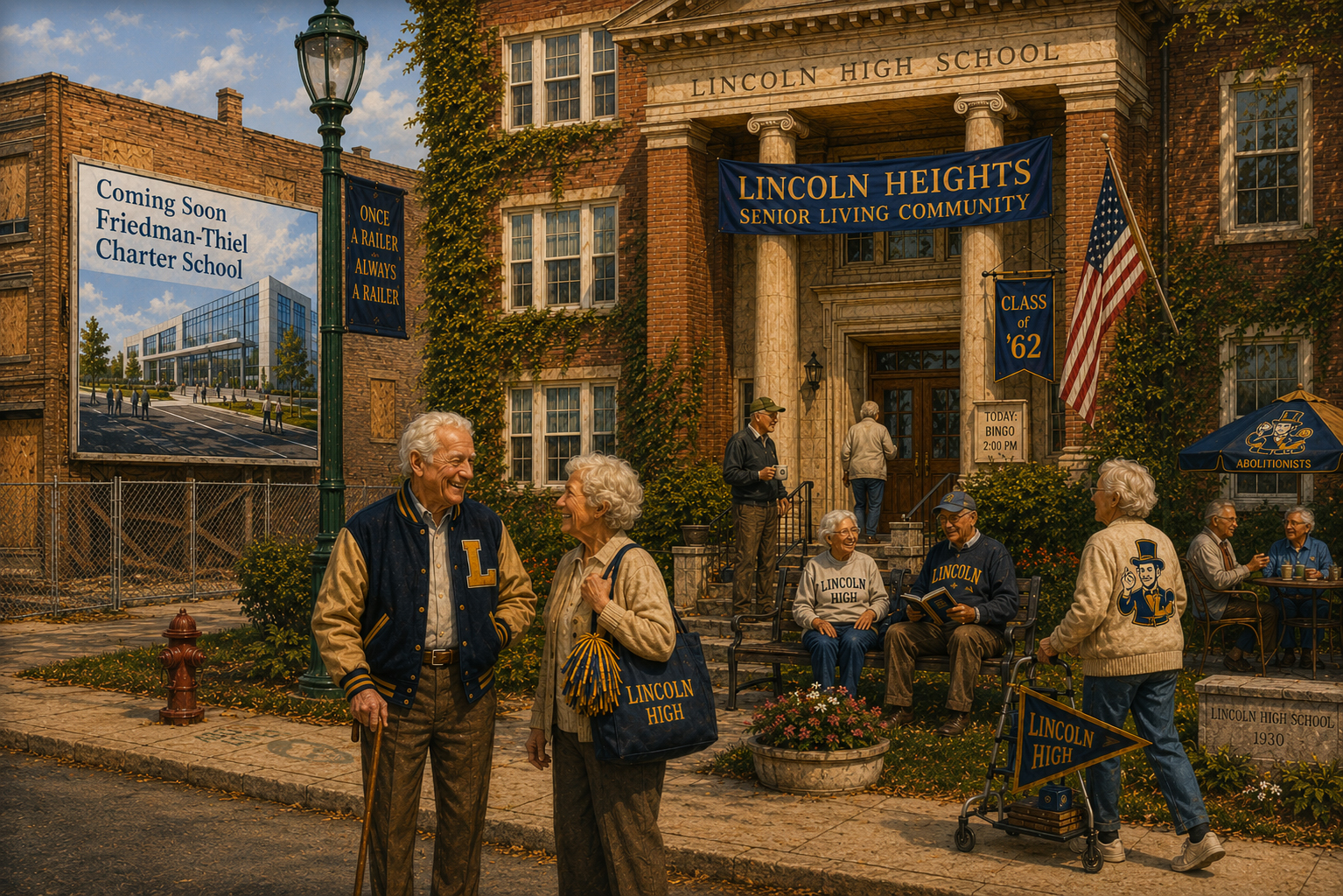
Add it all up and these alternatives subtract from student enrollment in traditional public schools. This puts those schools at risk for significant changes in their operations, and in many cases for their survival.
Todd Wallack reports in the Washington Post that “School closures have spiked 35 percent across the county over the past four years…” Using data released by National Center for Education Statistics in July, Wallack notes that “more than 1,000 schools closed in 2025–2026, compared with 755 in 2021–2022.
The decline in student enrollment also impacts the well-being and working conditions of teachers in schools that are still open. Key takeaways this year from the annual Teacher Survey of kindergarten through grade 12 public school teachers, conducted by RAND for the National Education Association, include the following:
- In 2026, teachers were more likely than similar working adults to report experiencing poor well-being on every indicator — a consistent pattern since 2021.
- Thirty percent of teachers reported holding a job outside their school systems.
- Only four in ten teachers reported pay raises in 2026 after adjusting for inflation.
In the analysis of their own research and research from other sources, Sofia B. Baker and Cory Koedel, in an article published by the Brookings Institution, found “Teachers report worsening working conditions along most dimensions, with the largest declines in working conditions that involve interactions with students and their families.” Baker and Koedel state that “teachers report a substantial increase in defiance, inappropriate language, threats, and serious disruptions…”
The declining well-being and working conditions of teachers no doubt contributes to the teacher departures or plans to leave the classroom. The Rand annual teacher survey found that “The share of teachers who intend to leave their jobs was 18 percent in 2026.”
Teachers’ plans to leave the classroom are not new. As we noted in a blog posted in 2024, a Pew Research Center report that year revealed that of those teachers “who don’t plan to retire or stop working this year, 29% say they will look for a new job in the 2023–2024 school year.”
Taken together these trends suggest that the future of public education is descending rather than ascending. This is problematic because public education is one of the pillars on which our American democracy was built. That pillar is cracking, but not falling apart completely, due to the fact that the state of public education in the U.S. varies considerably from state to state and by district within states.
For the Common Good: Recommitting to Public Education in a Time of Crisis, published in 2020, ends by stating:
If we have learned anything from this period of distancing from each other, it is that communities need to think holistically about how public institutions, like schools, serve and reinforce the nation’s longstanding commitment to the common good. We all have a role to play as the nation moves to recover and rebound from this crisis. If we use this moment to both reflect on the past and innovate toward the future, the result could be a more equitable and effective public education system.
As we have shown in this piece, the period from 2020 to 2026 has not been used “to reflect on the past and innovate toward the future.” It has been a period of regression.
If positive changes are not made in the next decade, public education will become a vestige of America’s past and not a contributor to its future. Given the pivotal role public education has played in moving this country forward, this would not bode well for the future of this nation.